Augustus Raises $180M at $1B Valuation for Stablecoin Bank

Key Points
- Augustus raised $180 million in Series B funding at a $1 billion valuation, led by Tiger Global with backing from founders of Nubank, Ramp, Circle, and Deel.
- The startup received conditional approval for a U.S. national bank charter from the Office of the Comptroller of the Currency in May, becoming the eighth bank to win conditional approval since 2010.
- Augustus is integrating stablecoin rails directly into its federally chartered clearing bank to modernize correspondent banking and cross-border payments.
Stablecoins as Mainstream Settlement Infrastructure
Augustus is targeting the correspondent banking system, the infrastructure that enables money movement between institutions across borders. Rather than issuing its own stablecoin, the startup is building an API-first platform that allows banks and fintechs to transact across both traditional payment rails and blockchain networks. The platform supports operating and FBO accounts and settles transactions via Swift, ACH, SEPA, and stablecoins, running on a proprietary core banking system called Marble.
Read Next
Treasury Sanctions BitBank Exchange Behind Iran's Bitcoin Hormuz Tolls
21 hours ago
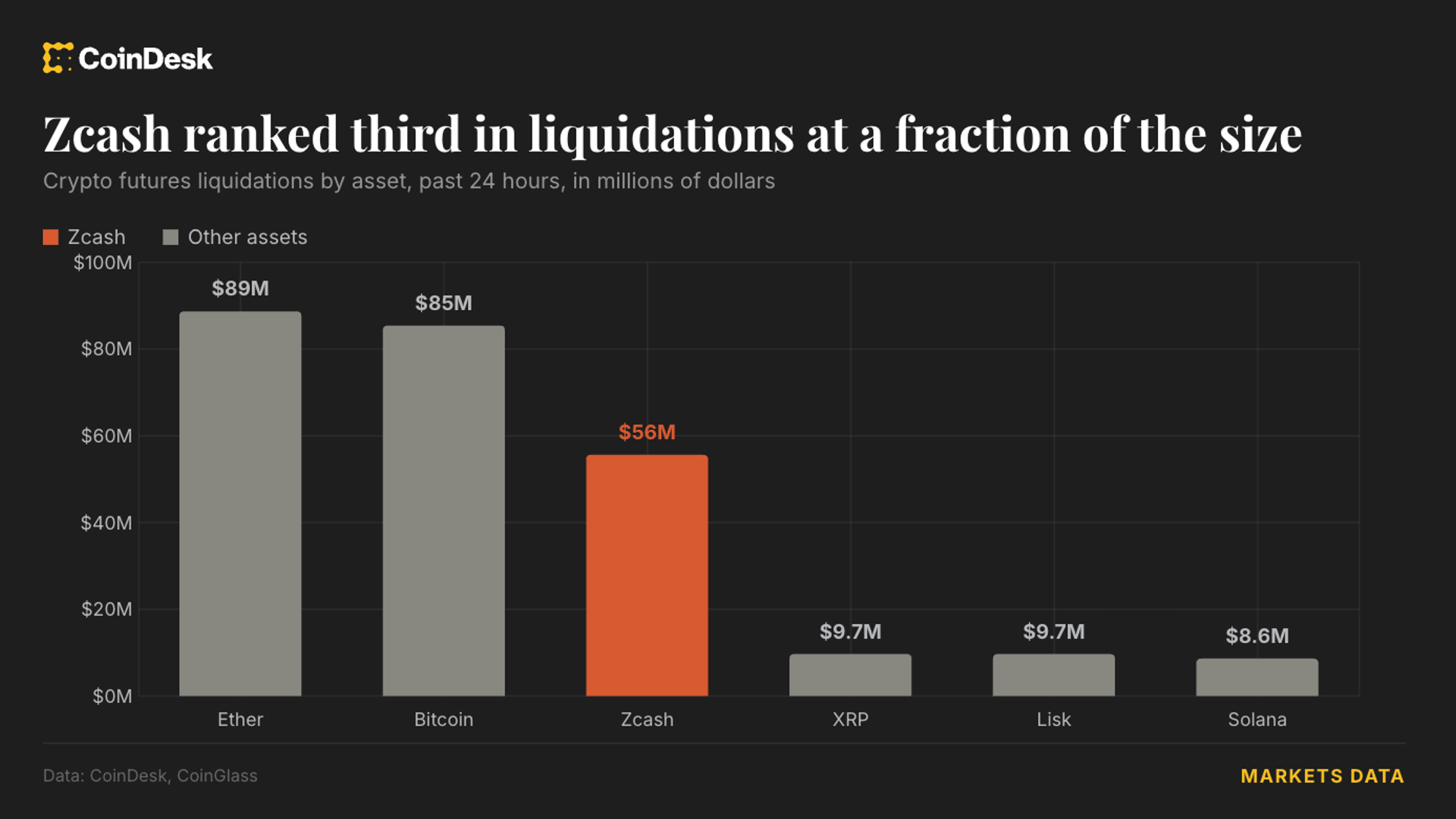
Zcash Jumps 17% as $345M in Crypto Liquidations Hit Traders
1 days ago
CEO and co-founder Ferdinand Dabitz stated: "We started Augustus with a simple thesis: the Dollar is the greatest product in the world but its distribution is fundamentally broken. This financing lets us execute on our mission to provide high-quality dollar access to international fintechs and banks. It's time to dollarize the world."
The company already counts crypto exchange Kraken among its customers. Dollar-pegged stablecoins have emerged as a multibillion-dollar settlement layer, extending the reach of the U.S. dollar while pressuring the traditional correspondent system that remains bound to weekday processing schedules and slower settlement times. By integrating stablecoin rails directly into a chartered bank, Augustus is positioning emerging crypto infrastructure as a modernization tool for mainstream financial institutions rather than an alternative workaround.
Related coverage: Treasury Sanctions BitBank Exchange Behind Iran's Bitcoin Hormuz Tolls
Augustus frames its mission partly in geopolitical terms, noting China's digital yuan and Russia's proposed BRICS Pay as challenges to Western currency dominance. The startup plans to deploy the new capital to expand operations across Latin America, Southeast Asia, the Middle East, and Africa—regions where dollar access remains constrained.
The core technology underpinning Augustus's platform, Marble, enables faster settlement and 24/7 transaction availability by deploying artificial intelligence across back-office operations. This represents an efficiency upgrade over traditional correspondent banking, which operates on a five-day weekly cycle with multiple intermediaries.
Augustus's approach differs from previous crypto banking attempts: rather than building parallel infrastructure competing with traditional banking, the startup is wiring stablecoin functionality directly into a federally chartered institution. This hybrid model allows it to offer both traditional banking services and blockchain-native settlement without requiring customers to choose between systems.
The $180 million Series B valuation at $1 billion places Augustus among fintech's highest-profile recent funding rounds. This marks the second major venture funding round for blockchain-native financial institutions anchored to federal banking charters, following the broader trend of stablecoin adoption by traditional financial infrastructure participants—a pattern that has accelerated since 2023.
Why this matters: If you're an international business making cross-border payments or a fintech serving global customers, Augustus's infrastructure could directly reduce your payment costs and settlement times. Dollar access constraints in emerging markets currently impose real friction on international commerce; a chartered bank offering 24/7 stablecoin settlement would eliminate existing delays. For investors in crypto and traditional finance, Augustus's conditional charter approval signals that regulators are willing to integrate blockchain infrastructure into the mainstream banking system—a regulatory precedent that will likely shape how future fintech companies structure their offerings.
Market Outlook
Augustus's expansion into Latin America, Southeast Asia, and Africa over the next 18 months will likely pressure traditional correspondent banking providers to accelerate digital infrastructure upgrades. If the company captures even 5-10% of emerging-market cross-border transaction volume within three years, it could fundamentally reshape how dollars flow through international payments, reducing settlement times from days to hours and forcing legacy players to adopt stablecoin rails or lose market share.
Sources: Publicly available news sources.
Disclaimer: This article was produced with AI assistance based on publicly available news sources. While we strive for accuracy, NewsOracle makes no warranty as to the completeness or accuracy of the information. Errors and omissions may occur. Readers should independently verify all information before acting on it. NewsOracle does not intend to defame any individual or organisation and accepts no liability for any loss or damage arising from reliance on this content. Content is for informational purposes only and does not constitute legal, financial, medical, or professional advice. All rights reserved. Unauthorised reproduction prohibited.
NewsOracle Editorial
The NewsOracle Markets Desk covers stock markets, cryptocurrency, economic policy and breaking financial news from Wall Street and global exchanges.
Latest coverage: Stablecoins