Tether USDT Faces 2-Year Compliance Deadline Under GENIUS Act
Key Points
- The GENIUS Act hit its one-year anniversary on July 19, 2026, with federal regulators missing their deadline to finalize stablecoin rules.
- Tether's USDT holds approximately 25% of reserves in non-compliant assets like precious metals, bitcoin, and lending, per recent disclosures.
- Circle, Tether's main rival, has made more visible efforts toward pre-compliance, while Tether launched a separate U.S.-focused token called USAT through Anchorage Digital.
Tether CEO Paolo Ardoino told CoinDesk immediately after Trump signed the GENIUS Act that the company would comply with the law. At that time, Ardoino indicated Tether would pursue both a separate U.S.-specific token and manage USDT to meet the law's foreign-issuer standards. When asked for an update on compliance efforts in recent days, Tether representatives did not provide a response, according to the reporting.
Diverging Compliance Paths Among Stablecoin Issuers
Read Next

Treasury Sanctions BitBank Exchange Behind Iran's Bitcoin Hormuz Tolls
21 hours ago
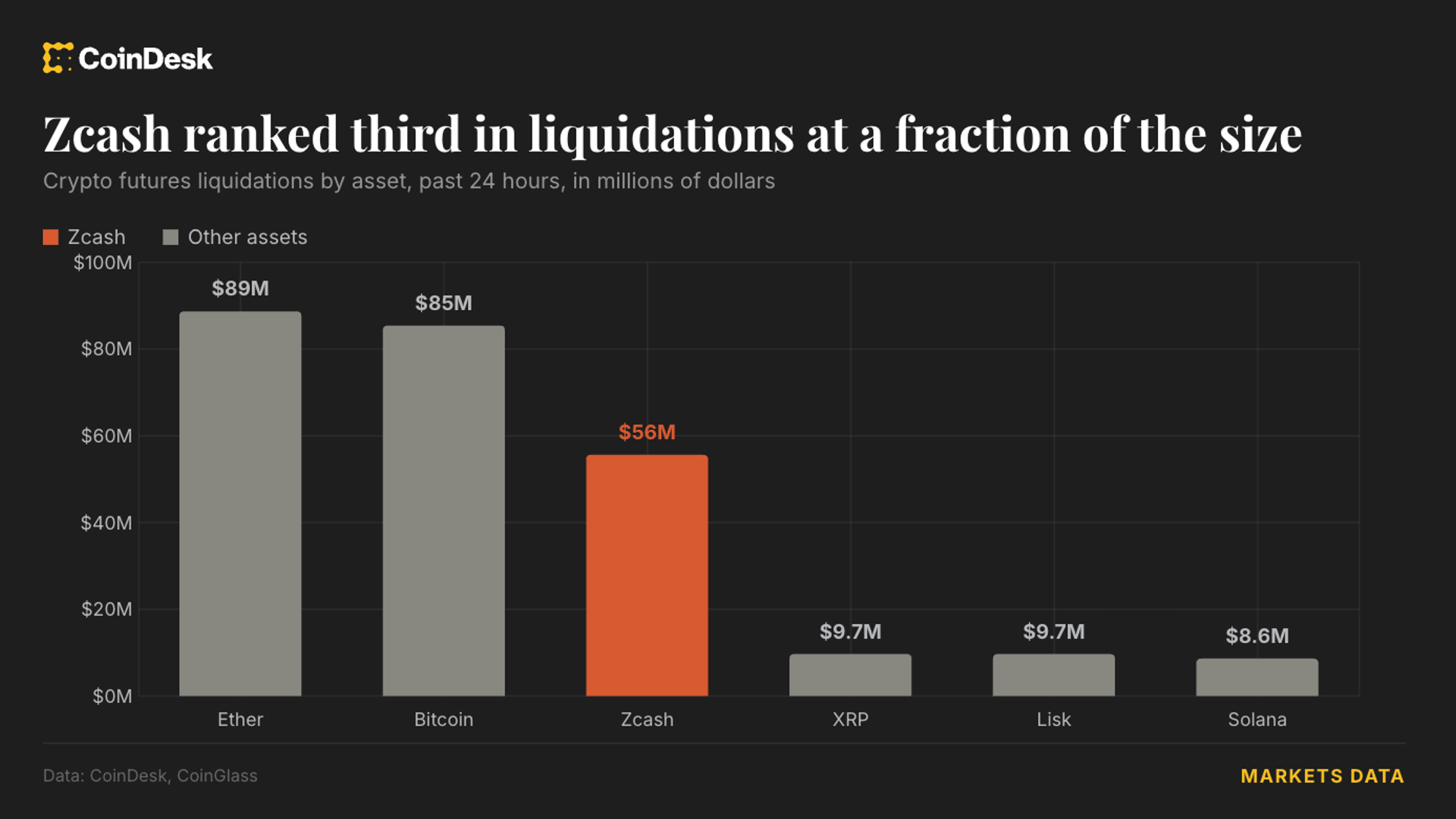
Zcash Jumps 17% as $345M in Crypto Liquidations Hit Traders
1 days ago
Tether's approach contrasts sharply with its main competitor Circle, which has made more apparent efforts to pre-comply with anticipated U.S. regulations. Tether launched USAT this year in partnership with U.S. banking partner Anchorage Digital, a token specifically designed with U.S. standards in mind. However, USAT remains at relatively low usage levels compared to the dominant USDT.
Kevin Wysocki, head of policy at Anchorage Digital, told CoinDesk that "non-compliant stablecoins cannot be used by U.S. institutions when the safe harbor expires in 2028, but we don't expect the market to wait." Wysocki suggested that institutional users will likely migrate toward compliant, bank-issued digital dollars well before the 2028 deadline even takes effect.
Related coverage: Treasury Sanctions BitBank Exchange Behind Iran's Bitcoin Hormuz Tolls
The GENIUS Act included a three-year grace period for compliance, with two years remaining on that clock. However, legal experts remain divided on whether foreign stablecoin issuers like Tether receive the same safe harbor protection as U.S.-based issuers. Some financial lawyers assume Tether has until July 18, 2028, to achieve compliance, while others contend that foreign issuers must comply immediately when regulations take full effect.
The current stablecoin market shows two dominant players—Tether and Circle—with several other entrants, including a token tied to President Donald Trump through World Liberty Financial, competing for distant third place. The regulatory pressure created by GENIUS has sparked increased stablecoin interest and issuance across the sector, with multiple crypto and traditional financial firms pursuing U.S. trust bank charters to streamline their stablecoin compliance pathways.
The one-year mark passing without regulators finalizing their implementation rules creates additional uncertainty for issuers like Tether that must now forecast compliance requirements without final regulatory guidance. This regulatory gap leaves room for interpretation about specific operational changes needed, potentially allowing Tether additional time to develop compliance strategies—or leaving the company vulnerable if regulators interpret GENIUS more strictly than current industry assumptions.
Why this matters: If you hold USDT, your stablecoin could become unusable on U.S. crypto exchanges in two years unless Tether makes dramatic changes to how it backs the token. If you trade on American platforms, the compliance deadline could force you to switch to alternative stablecoins like Circle's USDC or move your holdings offshore, directly affecting your trading options and costs.
Market Outlook
Tether will likely announce a formal compliance roadmap within six months to address reserve restructuring requirements. Market expectations suggest USDT adoption may decline gradually as institutional buyers migrate toward demonstrably compliant alternatives. The regulatory ambiguity surrounding foreign-issuer timelines could trigger legal challenges that delay enforcement, providing Tether additional runway beyond July 2028.
Sources: CoinDesk and other international news outlets.
Disclaimer: This article was produced with AI assistance based on publicly available news sources. While we strive for accuracy, NewsOracle makes no warranty as to the completeness or accuracy of the information. Errors and omissions may occur. Readers should independently verify all information before acting on it. NewsOracle does not intend to defame any individual or organisation and accepts no liability for any loss or damage arising from reliance on this content. Content is for informational purposes only and does not constitute legal, financial, medical, or professional advice. All rights reserved. Unauthorised reproduction prohibited.
Markets Desk
The NewsOracle Markets Desk covers stock markets, cryptocurrency, economic policy and breaking financial news from Wall Street and global exchanges.
Latest coverage: Cryptocurrency