Bitcoin Quantum Recovery Tool Excludes Satoshi's 1.1M Coins
Key Points
- Project Eleven built a zero-knowledge proof system that proves wallet ownership without revealing private keys, running in 243 milliseconds on a MacBook Air.
- BIP-361 proposes freezing over 34% of Bitcoin supply after five years, including roughly 1.1 million BTC attributed to Satoshi Nakamoto.
- The recovery tool exploits quantum computers' inability to break one-way hashing used in modern wallet derivation, though implementation requires contentious blockchain rule changes.
Project Eleven and Jim Posen, lead developer of the Binius proof system, built a zero-knowledge proof around this vulnerability gap. The system allows users to prove they know the key material sitting above their address in a wallet's derivation tree — proving ownership — without disclosing any private key material. The proof binds to a specific message, authorizing a migration transaction for frozen coins.
Speed Breakthrough Enables Practical Implementation
Read Next
Treasury Sanctions BitBank Exchange Behind Iran's Bitcoin Hormuz Tolls
21 hours ago
Zcash Jumps 17% as $345M in Crypto Liquidations Hit Traders
1 days ago
The benchmarks demonstrate a significant engineering advance. On an M5 MacBook Air, generating the proof takes 243 milliseconds on four cores, with verification taking 40 milliseconds and total memory usage around 2 gigabytes — all without requiring a GPU. Project Eleven's implementation runs the entire circuit construction, proof generation, and self-checking in 910 milliseconds on CPU alone, which the firm claims is 16 times faster than prior work. The system requires no trusted setup, a security requirement that can complicate cryptographic deployments.
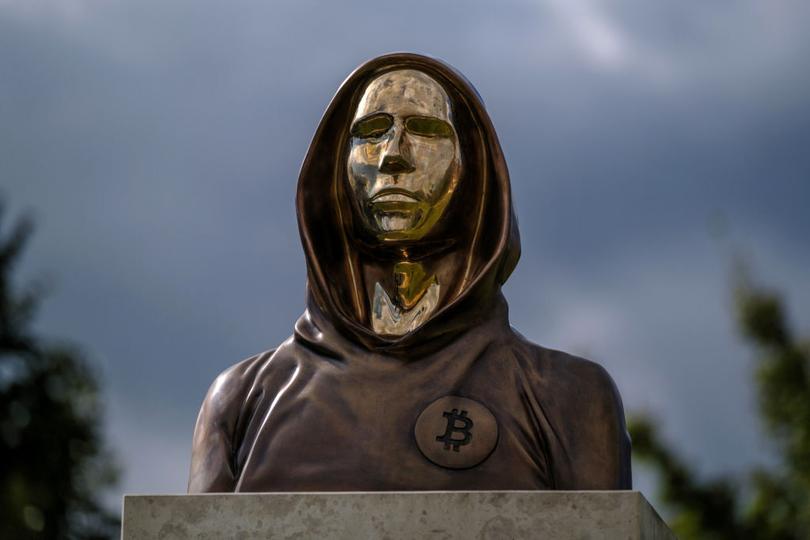
Despite the performance gains, significant barriers remain before any implementation protects live Bitcoin. The proof system remains unaudited, incomplete, and would require contentious changes to Bitcoin's blockchain rules. More fundamentally, the recovery mechanism cannot apply to Satoshi Nakamoto's coins because those holdings predate the derivation structures the proof relies on. The 1.1 million BTC attributed to Bitcoin's pseudonymous creator represent roughly 5% of total supply and occupy a special category in discussions of Bitcoin's future.
Related coverage: Treasury Sanctions BitBank Exchange Behind Iran's Bitcoin Hormuz Tolls
BIP-361's freeze proposal has faced resistance from elements of the Bitcoin community who argue that permanently locking coins — even those vulnerable to quantum attack — contradicts Bitcoin's philosophy of immutability. The recovery tool addresses one objection by ensuring that only true owners with seed material can prove control and migrate funds, but it does not resolve the governance question of whether such a fork should occur.
Quantum threat timelines remain uncertain. Cryptographers do not have consensus on when quantum computers will become capable of breaking elliptic curve cryptography at scale, estimates ranging from 10 to 30 years depending on hardware advancement rates.
Why this matters: If you hold Bitcoin, this research directly affects whether your coins could become permanently inaccessible in a future quantum computing scenario. Even if you believe such a freeze is unnecessary, the speed of this proof system — running in under a quarter-second on consumer hardware — changes the technical calculus that Bitcoin developers use when evaluating quantum preparedness. The tool's existence makes a quantum-triggered fork more technically feasible, which raises the probability this conversation moves from theoretical to policy in the next five to ten years.
Market Outlook
Project Eleven's breakthrough will likely accelerate Bitcoin community debates on quantum preparedness, though widespread adoption faces hurdles: the proof remains unaudited, Bitcoin rule changes face strong ideological resistance, and quantum threat timelines remain speculative. Expect competing proposals and extended technical review before any fork implementation.
Sources: CoinDesk and other international news outlets.
Disclaimer: This article was produced with AI assistance based on publicly available news sources. While we strive for accuracy, NewsOracle makes no warranty as to the completeness or accuracy of the information. Errors and omissions may occur. Readers should independently verify all information before acting on it. NewsOracle does not intend to defame any individual or organisation and accepts no liability for any loss or damage arising from reliance on this content. Content is for informational purposes only and does not constitute legal, financial, medical, or professional advice. All rights reserved. Unauthorised reproduction prohibited.
Markets Desk
The NewsOracle Markets Desk covers stock markets, cryptocurrency, economic policy and breaking financial news from Wall Street and global exchanges.
Latest coverage: Bitcoin