$1.6B in DeFi Liquidity Sits Idle, Missing $150M in Annual Fees
Key Points
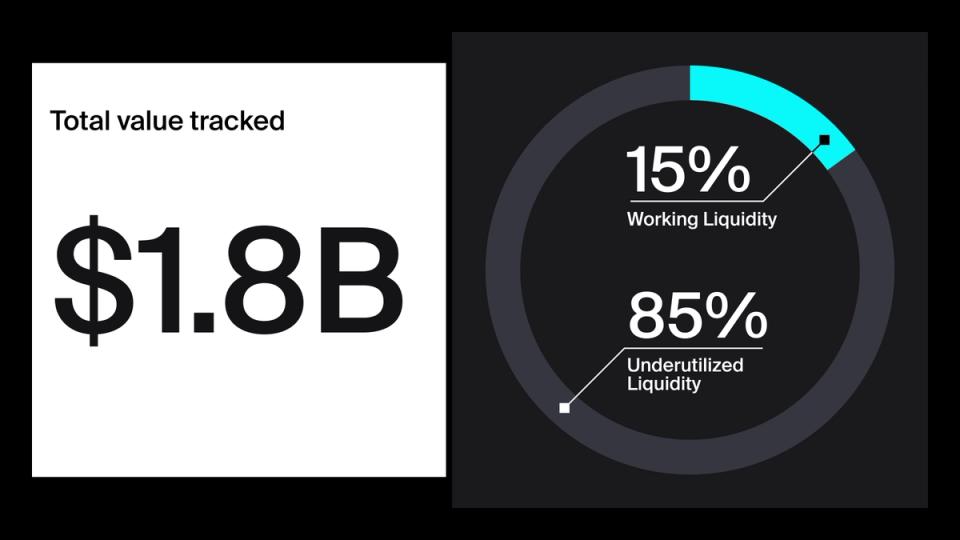
- $1.6 billion in liquidity across Uniswap, PancakeSwap, and Aerodrome was underutilized in H1 2026, representing 85% of tracked concentrated liquidity pools.
- Roughly $542 million sat fully out of range weekly, earning zero trading fees and providing no market depth during the first half of 2026.
- Out-of-range liquidity providers could be missing approximately $150 million in annual fees based on a blended in-range fee APR of 35%.
Idle Capital and Missed Earnings
Dune tracked Uniswap v3 and v4, PancakeSwap v3, and Aerodrome Slipstream across seven chains using weekly snapshots from January 6 to June 30, 2026. The out-of-range share stayed mostly between 25% and 35%, rising to nearly 41% in early February. Dune estimated that out-of-range providers sitting idle could be missing roughly $150 million in fees each year, based on a blended in-range fee APR of about 35%.
Read Next
Treasury Sanctions BitBank Exchange Behind Iran's Bitcoin Hormuz Tolls
21 hours ago
Zcash Jumps 17% as $345M in Crypto Liquidations Hit Traders
1 days ago
The research found that idle liquidity correlated more closely to price movements than to volatility. A steady price move in one direction is more likely to strand capital than a volatile week that ended near where it began. The bitcoin price hovered near $90,000 during January before crashing to around $60,000, illustrating the directional pressure that can strand liquidity providers.
Interestingly, smaller positions were far more likely to sit idle. Around 54% of liquidity in positions below $1,000 was out of range, compared with 26% for positions above $1 million. Yet positions worth more than $1 million accounted for 47% of all idle capital, or roughly $260 million, indicating that larger capital pools still held most of the inactive funds despite being better-managed overall.
Related coverage: Treasury Sanctions BitBank Exchange Behind Iran's Bitcoin Hormuz Tolls
Individual wallets accounted for between 82% and 94% of attributed idle capital on Uniswap v3, depending on the chain, compared with contract-managed positions that stayed within more consistent ranges. This suggests liquidity deposited directly by users and requiring manual adjustments is more likely to go unattended and fall out of range.
Filippo Armani, research lead at Dune, noted that decentralized exchanges have grown significantly. "Decentralized exchanges have grown into one of the deepest, most liquid markets in crypto," Armani said. "What our research shows is that it has reached this scale even though much of its liquidity is not yet fully at work."
1inch warned that idle liquidity will become increasingly costly as markets expand. The company argued that more capital will be stranded, and more trading fees will go unearned as liquidity becomes thinner with growth. The findings arrive as retail platforms bring more users and traditional assets onchain and financial firms expand their work on tokenized funds and blockchain-based settlement.
While out-of-range providers could recover the estimated $150 million in annual fees, the figure is not guaranteed recoverable income. Keeping positions active can add transaction costs, execution risk, and exposure to unfavorable price movements. 1inch commissioned the research ahead of the planned launch of Aqua, a new liquidity protocol designed to address such inefficiencies.
Unlike the early stages of decentralized finance in 2019-2020, when liquidity fragmentation was a primary concern, the 2026 challenge has shifted from scarcity to utilization—suggesting the ecosystem has matured enough that capital availability now exceeds active demand at optimal price ranges.
If you provide liquidity on decentralized exchanges, this research directly affects your income. The data suggests that roughly one-third of your capital could be earning nothing on any given week if you set your price range poorly relative to market movements. Even large positions—those that should be more actively managed—are leaving $260 million idle annually, indicating that many liquidity providers either lack the tools or patience to maintain active positions in volatile markets.
Market Outlook
As decentralized finance matures and more institutional capital enters the market, pressure will mount to automate liquidity management and reduce out-of-range positions. Projects like 1inch's Aqua protocol aim to address this inefficiency, potentially reducing idle liquidity below 25% by mid-2027. Expect increased adoption of actively managed positions and concentrated liquidity strategies.
Sources: CoinDesk and other international news outlets.
Disclaimer: This article was produced with AI assistance based on publicly available news sources. While we strive for accuracy, NewsOracle makes no warranty as to the completeness or accuracy of the information. Errors and omissions may occur. Readers should independently verify all information before acting on it. NewsOracle does not intend to defame any individual or organisation and accepts no liability for any loss or damage arising from reliance on this content. Content is for informational purposes only and does not constitute legal, financial, medical, or professional advice. All rights reserved. Unauthorised reproduction prohibited.
Markets Desk
The NewsOracle Markets Desk covers stock markets, cryptocurrency, economic policy and breaking financial news from Wall Street and global exchanges.
Latest coverage: Crypto