Ethereum Foundation Deploys AI Agents to Hunt Network Vulnerabilities

Key Points
- ETHEREUM — The Ethereum Foundation's Protocol Security team has deployed artificial intelligence agents to systematically search for vulnerabilities across the network's critical infrastructure, marking a shift in how the organization approaches security auditing.
- In a blog post Thursday, the researchers announced they have run coordinated AI agents against systems the Ethereum network depends on, including systems software, cryptographic code, and smart contracts. "We've been running coordinated AI agents against the kinds of systems the network depends on, like systems software, cryptographic code, and contracts that have to be right," the researchers wrote. "The agents found real bugs."
- One vulnerability discovered through the AI agents involved a remotely triggered panic in libp2p's gossipsub, which is part of the peer-to-peer layer used by Ethereum consensus clients. The issue was fixed and disclosed on Github as CVE-2026-34219, making it one of the first publicly documented findings from the initiative.
The approach represents a departure from traditional manual code review practices. While human security researchers have historically searched for vulnerabilities through code inspection, AI agents can scan entire codebases, test potential exploits, and generate findings for review simultaneously across far larger bodies of code.
AI Finding Bugs Is Not the Surprise
Read Next

Treasury Sanctions BitBank Exchange Behind Iran's Bitcoin Hormuz Tolls
23 hours ago
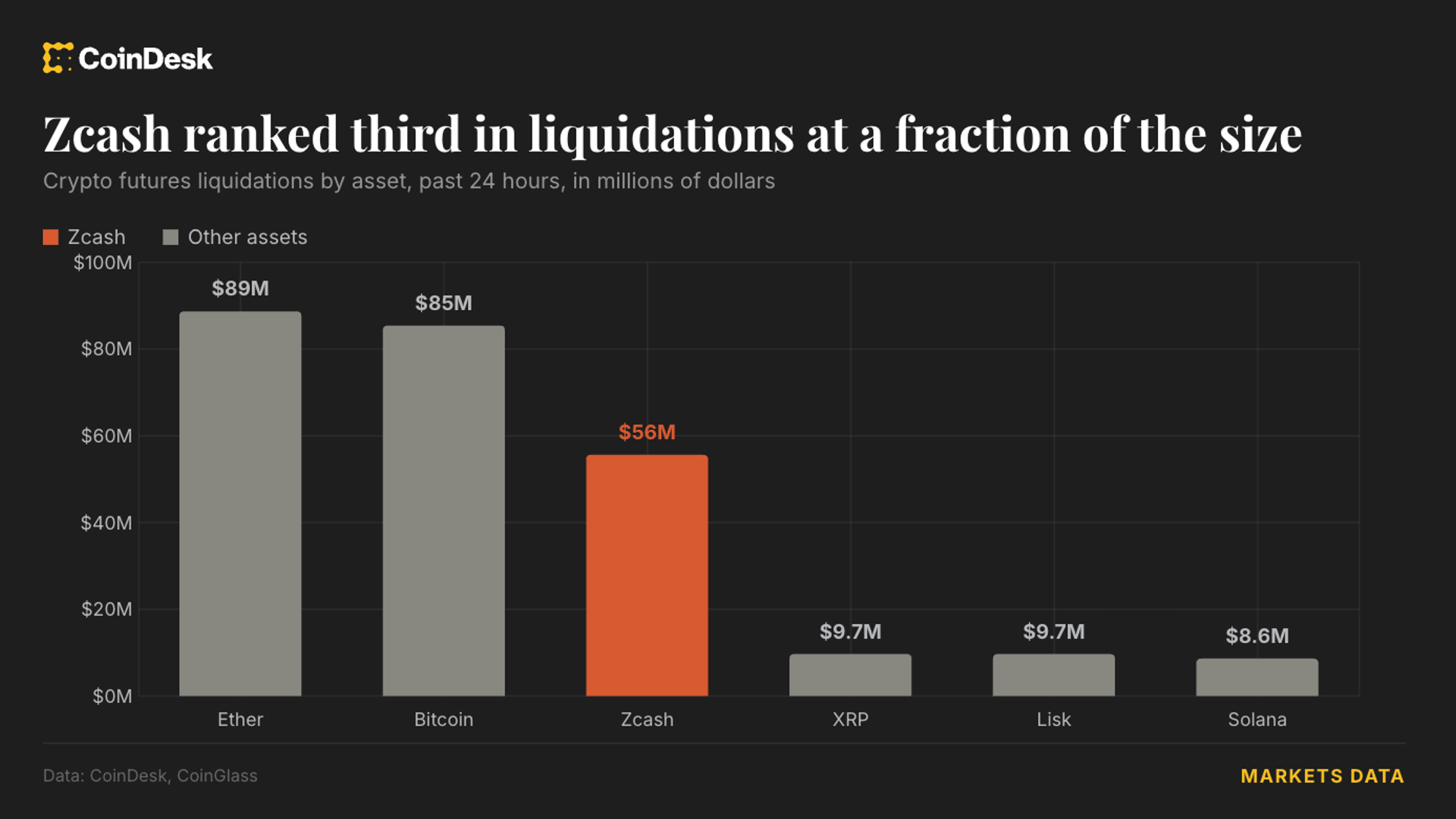
Zcash Jumps 17% as $345M in Crypto Liquidations Hit Traders
1 days ago
The Ethereum Foundation researchers noted that the most unexpected aspect of their work was not that the AI agents found bugs, but rather the distribution of effort required. "Agents finding bugs wasn't the surprise," the team wrote. "The surprise was how little of the work went into finding them, and how much went into telling the real bugs from the ones that just looked real."
This distinction proved critical because AI-generated findings can appear technically convincing even when they are incorrect. The agents are organized into specialized roles including reconnaissance, hunting, gap-filling, and validation. Some search for possible attack paths while others attempt to reproduce failures and verify whether they work against production code.
Related coverage: Treasury Sanctions BitBank Exchange Behind Iran's Bitcoin Hormuz Tolls
To address the problem of false positives, the researchers established a rigorous standard for validation. "One rule matters more than any other. A candidate isn't a finding until there's a self-contained artifact that reproduces the failure against the real code, and that runs for someone who didn't write it," the researchers wrote. "The reproducer doesn't read the write-up, and it doesn't care how confident the model sounded. It either runs or it doesn't."
The use of AI in vulnerability research has accelerated across the blockchain industry. In May, security researcher Taylor Hornby used AI-assisted auditing to find a critical vulnerability in Zcash's Orchard privacy pool during an audit. The flaw had existed for approximately four years and could have allowed an attacker to create counterfeit ZEC without an obvious on-chain trace. A network upgrade to restore confidence in Zcash's supply remains in development.
The Ethereum Foundation's deployment of AI agents represents a broader trend of automation in security research. Unlike traditional fuzzers, which test software for flaws through random input generation, AI agents can generate vulnerability reports, assess impact, and create proof-of-concept tests. However, the foundation's experience underscores that automation does not eliminate the need for human judgment and verification.
The researchers characterized the shift as one of displacement rather than replacement. "AI didn't replace the security researcher. It moved the work," the Ethereum Foundation said. "Agents let us cover far more ground, but humans still need to separate signal from noise."
This approach matters because Ethereum processes billions of dollars in transaction value daily. A single undetected vulnerability in the consensus layer or peer-to-peer network could potentially compromise the security of the entire system. By using AI agents to expand the scope of vulnerability searches before attackers identify flaws, the Ethereum Foundation aims to reduce the window of exposure for critical network infrastructure.
Market Outlook
Expect AI-assisted security audits to become standard practice across blockchain protocols and cryptocurrency exchanges within 18 months. The cost-efficiency of AI agents versus traditional security researchers will likely drive broader adoption, though human verification will remain essential for validating critical findings.
Sources: Publicly available news sources.
Disclaimer: This article was produced with AI assistance based on publicly available news sources. While we strive for accuracy, NewsOracle makes no warranty as to the completeness or accuracy of the information. Errors and omissions may occur. Readers should independently verify all information before acting on it. NewsOracle does not intend to defame any individual or organisation and accepts no liability for any loss or damage arising from reliance on this content. Content is for informational purposes only and does not constitute legal, financial, medical, or professional advice. All rights reserved. Unauthorised reproduction prohibited.
Markets Desk
The NewsOracle Markets Desk covers stock markets, cryptocurrency, economic policy and breaking financial news from Wall Street and global exchanges.
Latest coverage: Ethereum