Cameroon's Youth Deceived Into Fighting Russia's Ukraine War
Key Points
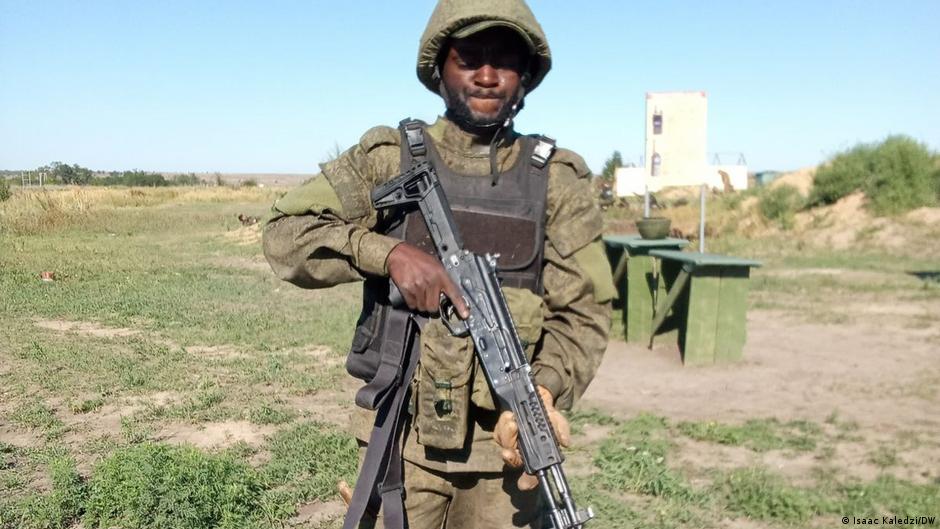
- Ukrainian officials reported nearly 3,000 African fighters for Russia as of May 2026, with Cameroon identified as a leading source.
- Cameroon's government confirmed 16 Cameroonian nationals died, 7 in military action, though actual deaths are likely higher according to DW correspondent Dorcas Ekupe.
- Young Cameroonians earn approximately 100,000 CFA francs monthly but are offered 3 million CFA francs to work, often unknowingly joining military forces.
The Russian paramilitary Wagner Group and its successor, the Africa Corps, operate as Moscow's primary instruments for expanding military presence across Africa, according to Banjo Herman, a lecturer and political analyst at the University of Bamenda. Herman noted that Russian government programs such as the African Initiative and Alabuga present themselves as cultural or educational exchange schemes but have been linked to military recruitment. France previously described the African Initiative as a front administered by Russian intelligence services designed to spread propaganda.
The economic gap between Cameroon and Russia makes recruitment offers especially compelling. A carpenter in Cameroon cannot earn more than 100,000 CFA francs, approximately €150 or $175, per month, but recruitment agents offer 3 million CFA francs for work that recruits do not fully understand. Offers of Russian citizenship within six months provide additional incentive. Herman noted that not all Cameroonians in Russia were victims of deception; some had lived there for years and were absorbed into the military over time, doing reasonably well by local standards.
Read Next

Gaza War Three Years: 1 in 10 Pre-War Population Killed or Wounded
9 days ago

Conservatives Pledge £10bn for 'Britannia Shield' Air Defence System
10 days ago
Despite awareness of risks, some youth continue accepting recruitment offers. Ekupe documented a prevailing fatalism among certain recruits: "Sometimes people say, 'If I die, I die.'" This attitude, combined with financial desperation and citizenship promises, explains why recruitment continues to succeed even as evidence of casualties mounts among families grieving losses in northwestern Cameroon and other regions.
What Happens Next
Cameroon and other African nations may face mounting pressure to establish stronger recruitment monitoring and prosecution mechanisms to prevent their citizens from joining foreign militaries. International attention on this issue could prompt the African Union to issue advisory statements, though enforcement remains challenging given the economic pull of recruitment offers and limited resources for investigation in affected countries.
Sources: DW and other international news outlets.
Disclaimer: This article was produced with AI assistance based on publicly available news sources. While we strive for accuracy, NewsOracle makes no warranty as to the completeness or accuracy of the information. Errors and omissions may occur. Readers should independently verify all information before acting on it. NewsOracle does not intend to defame any individual or organisation and accepts no liability for any loss or damage arising from reliance on this content. Content is for informational purposes only and does not constitute legal, financial, medical, or professional advice. All rights reserved. Unauthorised reproduction prohibited.
NewsOracle Editorial
The NewsOracle Politics Desk covers US politics, Congress, the White House, Supreme Court, global elections and international relations.
Latest coverage: Africa, Russia, Ukraine War, Cameroon