Houthis Attack Red Sea Shipping, Threaten Yemen Full-Scale War
Key Points
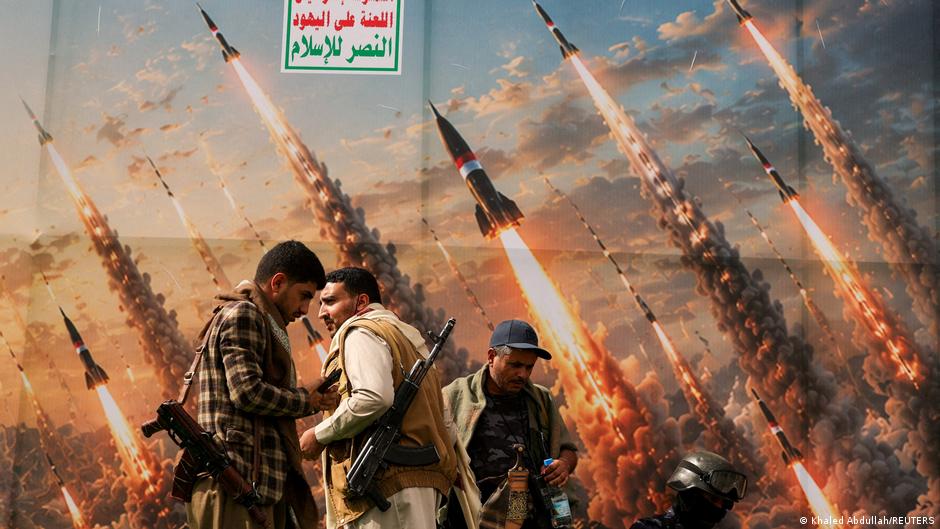
- Houthis attacked a crude oil tanker in the Red Sea off Saudi Arabia on Monday, August 25, 2026, following earlier strikes on Saudi infrastructure.
- The militia attacked the port city of Mokha under Saudi-backed Yemeni government control in August, ending four years of relative calm since the 2022 ceasefire.
- Saudi Arabia created a 14-country Maritime Defense Alliance in July to protect Red Sea shipping and counter Houthi threats across the Bab el-Mandeb Strait.
Houthi Pressure Campaign and Saudi Arabia's Response
The current military flare-up ended four years of relative calm that had prevailed since a 2022 ceasefire between the Houthis and Yemen's internationally recognized government. Despite this ceasefire, Saudi Arabia has continued to support the Yemeni government financially and militarily, while never fully lifting its air and port blockades in areas under Houthi control. The Houthis, meanwhile, consolidated their position as Yemen's de facto rulers.
Read Next

Gaza War Three Years: 1 in 10 Pre-War Population Killed or Wounded
9 days ago
Conservatives Pledge £10bn for 'Britannia Shield' Air Defence System
10 days ago
Al-Omeisy indicated the Houthis face domestic pressure to fulfill promises and deliver improved livelihoods to their population. He suggested they are using the wider Middle East conflict to distract from internal failures by "saying that we are now busy with another war." He also noted that the Houthis have "learned their lessons from how Iran managed to basically dominate the Strait of Hormuz," timing their blockade strategy to exploit Saudi Arabia's vulnerability.
In response to mounting threats to Red Sea shipping, Saudi Arabia created a Maritime Defense Alliance with more than 14 countries, including the United States, in July 2026. Alice Gower, director of geopolitics and security at the London-based consulting firm Azure Strategy, stated that Saudi Arabia "wants a more secure Red Sea, but also wants to achieve that without becoming trapped in another war in Yemen."
Related coverage: Gaza War Three Years: 1 in 10 Pre-War Population Killed or Wounded
Gower emphasized that "instability in Yemen is no longer simply a problem on Saudi Arabia's southern border," noting that Houthi attacks threaten shipping, raise insurance costs, deter investors, and disrupt infrastructure on which Saudi Arabia's Vision 2030 economic transformation increasingly depends. She explained that "the new Saudi-led maritime coalition is part of that approach as it allows Riyadh to spread the security burden, strengthen regional deterrence and counter threats across the Bab el-Mandeb, Red Sea and Gulf of Aden as part of the same security problem," though she cautioned that the coalition's effectiveness remains to be proven.
What Happens Next
The Maritime Defense Alliance's effectiveness will determine whether Houthi attacks decline or escalate further. If the coalition successfully disrupts Houthi operations, regional pressure on the militia may ease. Conversely, if Houthi strikes continue unabated, Saudi Arabia faces pressure to intensify military responses or negotiate concessions, risking renewed large-scale conflict in Yemen and threatening global shipping routes.
Sources: DW and other international news outlets.
Disclaimer: This article was produced with AI assistance based on publicly available news sources. While we strive for accuracy, NewsOracle makes no warranty as to the completeness or accuracy of the information. Errors and omissions may occur. Readers should independently verify all information before acting on it. NewsOracle does not intend to defame any individual or organisation and accepts no liability for any loss or damage arising from reliance on this content. Content is for informational purposes only and does not constitute legal, financial, medical, or professional advice. All rights reserved. Unauthorised reproduction prohibited.
NewsOracle Editorial
The NewsOracle Politics Desk covers US politics, Congress, the White House, Supreme Court, global elections and international relations.
Latest coverage: Yemen