Bitcoin BIP-110 Fork Dies After Mining Just 2 Blocks in 8 Hours

Key Points
- BIP-110 fork activated at block 961,632 on Saturday but mined only two blocks in approximately eight hours before stalling.
- The breakaway chain commanded just 2.53% of recent mining support, far below the 55% threshold needed for activation.
- Michael Saylor reported 99.85% of Bitcoin's hashpower remained on the main network, leaving BIP-110 more than 80 blocks behind.
A Proposal Divided the Community
BIP-110 sought to temporarily block people from stuffing images, text, and other non-financial data into Bitcoin transactions, a practice popularized by Ordinals inscriptions. Supporters argued the practice congested the network and inflated fees for ordinary payments. The proposal's detractors, comprising the vast majority of Bitcoin's developer and mining community, viewed it as censorship that violated Bitcoin's core principle of censorship resistance.
Read Next
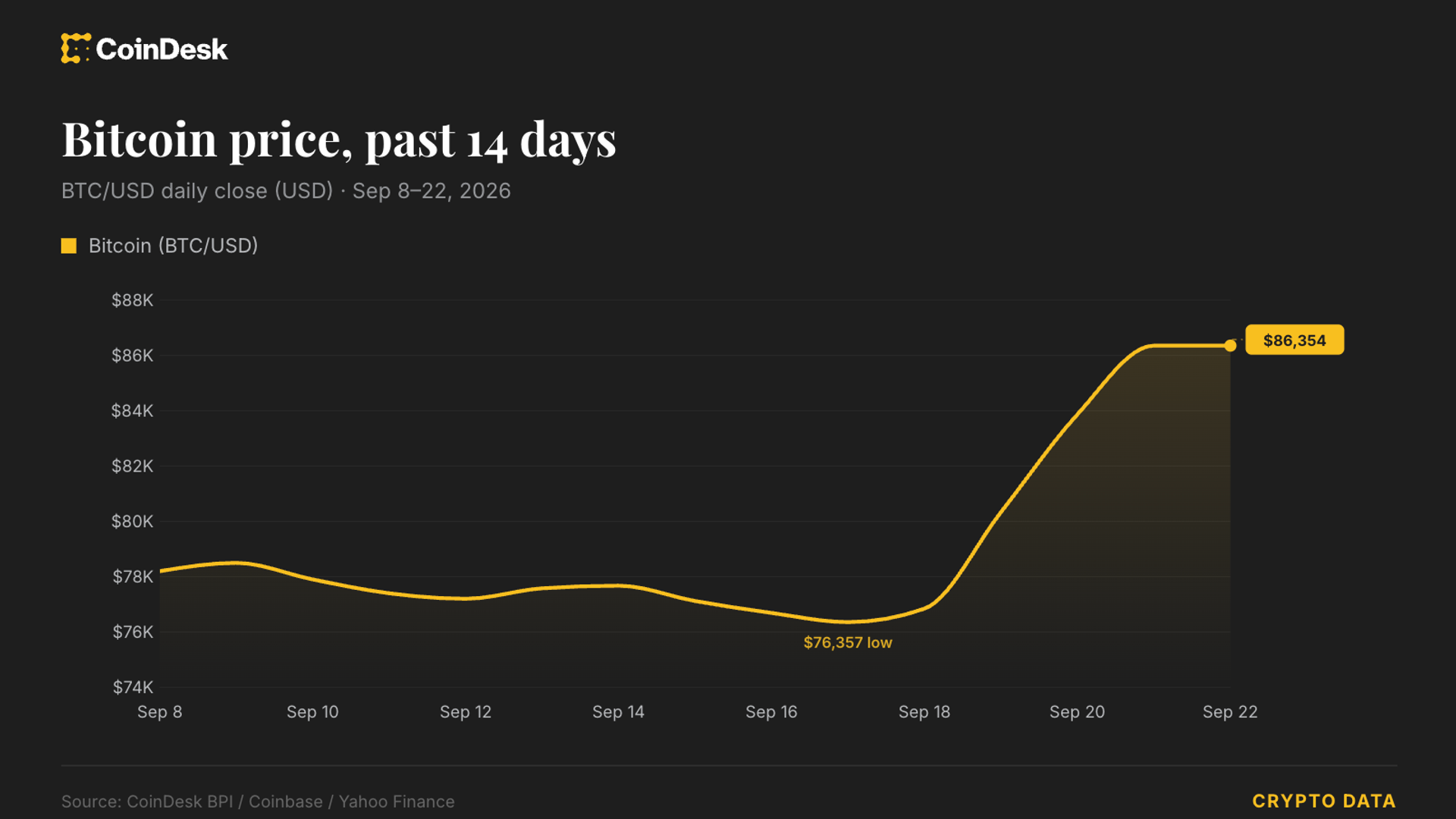
Bitcoin Consolidates Near $86,000 as Rally Narrows
15 hours ago
Oil Falls as Iran Signals Hormuz Reopening; Bitcoin Holds $86K
1 days ago
Strategy co-founder Michael Saylor warned before the fork that converting a spam dispute into a consensus change set a dangerous precedent. "Bitcoin worked exactly as designed," Saylor posted early Sunday morning. "BIP-110 was free to fork, and the network was free not to follow."
Jameson Lopp, co-founder of Bitcoin security company Casa, took a harder stance on X, writing: "I won't be 'welcoming back' or unblocking any BIP-110 supporters. They proved themselves to be susceptible to delusional propaganda from folks emanating reality distortion fields."
Related coverage: Bitcoin Consolidates Near $86,000 as Rally Narrows
The fork's technical mechanics accelerated its collapse. An AntPool-mined block without BIP-110 signal was accepted by the main network but rejected by BIP-110 nodes, while a miner on the Ocean pool produced an alternative block the minority chain followed. As the main Bitcoin network churned out blocks roughly every ten minutes, the BIP-110 chain fell dozens of blocks behind within hours.
Bitcoin's difficulty recalibration mechanism, which triggers every 2,016 blocks, created an inescapable trap for the fork. Without sufficient hashpower to maintain the current difficulty setting, the BIP-110 chain faced months of grinding block production before reaching the next adjustment window. At approximately 2.53% hashpower, the fork would need roughly 350 days to reach 2,016 blocks, whereas the main network required only two weeks.
This episode marks only the second major Bitcoin fork attempt in recent years that failed to gain significant mining traction, reinforcing the network's demonstrated resistance to contentious changes without overwhelming community consensus.
Related Guide: Read our complete guide →
Market Outlook
The BIP-110 fork's failure likely ends activist efforts to implement anti-spam restrictions through majority mining support alone. Future contentious proposals may require demonstrating 50%+ initial support before activation, or face similar swift rejection. Bitcoin's fork-resistance mechanism appears to have established a de facto 55%-75% threshold for network-altering changes.
Sources: Decrypt and other international news outlets.
Disclaimer: This article was produced with AI assistance based on publicly available news sources. While we strive for accuracy, NewsOracle makes no warranty as to the completeness or accuracy of the information. Errors and omissions may occur. Readers should independently verify all information before acting on it. NewsOracle does not intend to defame any individual or organisation and accepts no liability for any loss or damage arising from reliance on this content. Content is for informational purposes only and does not constitute legal, financial, medical, or professional advice. All rights reserved. Unauthorised reproduction prohibited.
NewsOracle Editorial
The NewsOracle Markets Desk covers stock markets, cryptocurrency, economic policy and breaking financial news from Wall Street and global exchanges.
Latest coverage: Bitcoin