BlackRock, Coinbase Pledge $15M to Quantum-Proof Bitcoin

Key Points
- Nine institutional firms launched Bitcoin Security Consortium with $15M in combined pledges over three years.
- Bitcoin currently uses elliptic curve cryptography vulnerable to sufficiently powerful quantum computers.
- Galaxy separately announced $5M developer grant program for quantum-resistant Bitcoin solutions two days earlier.
ARK Invest estimated earlier this year that roughly 35% of the total Bitcoin supply sits in addresses potentially vulnerable to a future quantum attack. Post-quantum cryptography—new mathematical methods designed to resist quantum machines—represents the technical focus of the consortium's funding.
Phong Le, CEO of Strategy (the company holding more Bitcoin than any other publicly traded firm), stated: "As long-term holders, we have every incentive to see Bitcoin remain secure for generations. Funding the people who do this work, and helping inform the conversation around it, is a natural way for us to contribute."
Read Next

Treasury Sanctions BitBank Exchange Behind Iran's Bitcoin Hormuz Tolls
21 hours ago
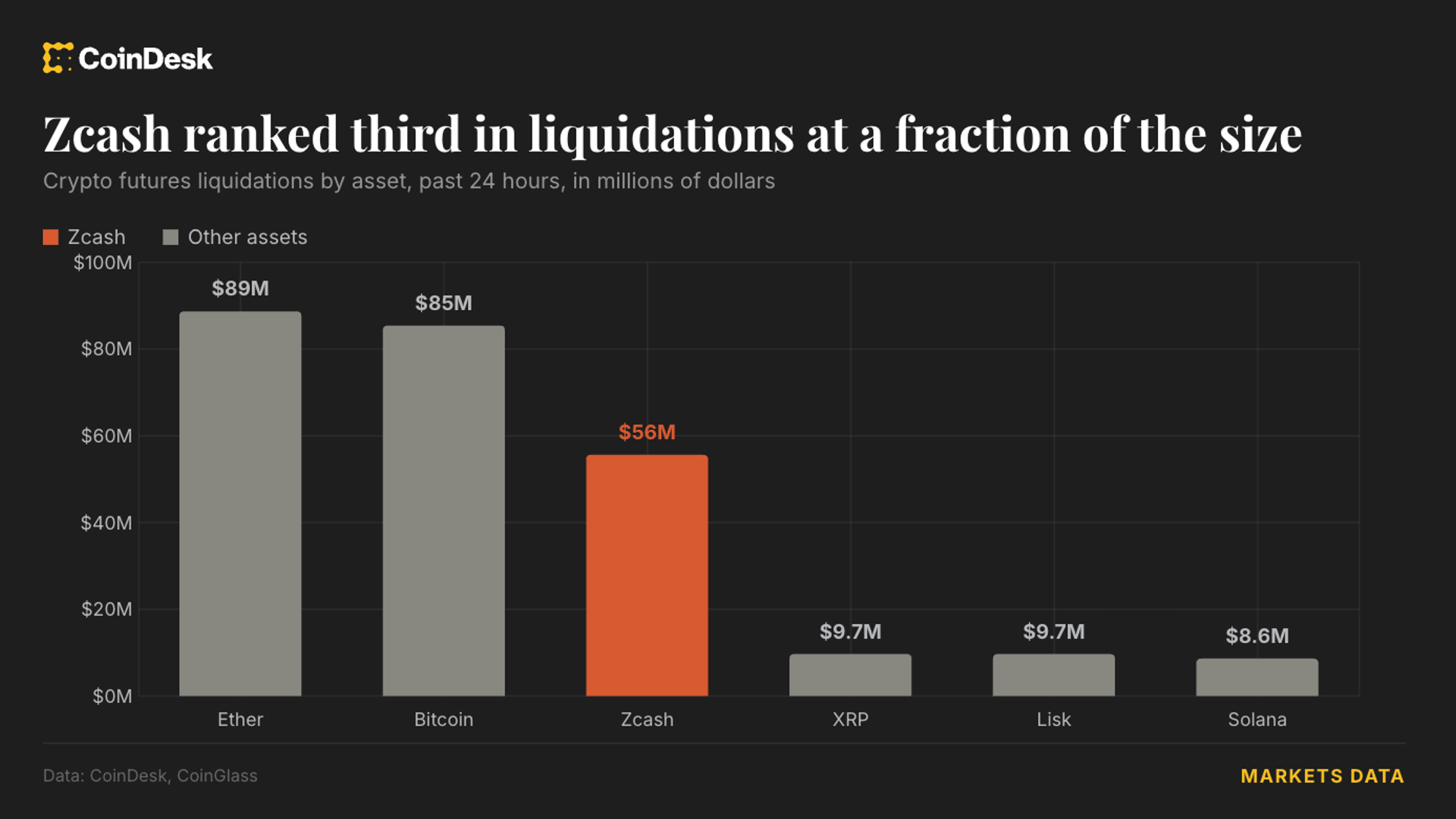
Zcash Jumps 17% as $345M in Crypto Liquidations Hit Traders
1 days ago
Robert Mitchnick, BlackRock's global head of digital assets, said: "Bitcoin Core developers do incredibly important work, and we're pleased that our firm and the others in this group will now be making significant additional funding available to support Bitcoin's long-term security needs."
Galaxy moved ahead of the consortium announcement by two days. On Monday, the firm launched its Bitcoin Quantum Readiness Initiative, committing up to $5 million in grants for developers working on post-quantum solutions. Galaxy also formed a Quantum Advisory Council with academics from the University of Calgary and Boston University.
Related coverage: Treasury Sanctions BitBank Exchange Behind Iran's Bitcoin Hormuz Tolls
Bitcoin development proceeds slowly by design. Any upgrade to quantum-resistant signatures could require years of research, consensus-building, and ecosystem-wide deployment across wallets, exchanges, and hardware devices. The consortium's timing reflects growing urgency: the gap between quantum computing advancement and Bitcoin development readiness is widening, with the quantum sector moving substantially faster than blockchain security research has engaged with the problem.
Related Guide: Read our complete guide →
Market Outlook
The consortium's three-year funding window aligns with quantum threat timelines. If Q-Day arrives near 2029 as Project Eleven suggests, Bitcoin's upgrade pathway—already constrained by decentralized governance—will face time pressure. Success depends on whether post-quantum cryptography research can achieve developer consensus and network-wide implementation before quantum capabilities mature.
Sources: Publicly available news sources.
Disclaimer: This article was produced with AI assistance based on publicly available news sources. While we strive for accuracy, NewsOracle makes no warranty as to the completeness or accuracy of the information. Errors and omissions may occur. Readers should independently verify all information before acting on it. NewsOracle does not intend to defame any individual or organisation and accepts no liability for any loss or damage arising from reliance on this content. Content is for informational purposes only and does not constitute legal, financial, medical, or professional advice. All rights reserved. Unauthorised reproduction prohibited.
NewsOracle Editorial
The NewsOracle Markets Desk covers stock markets, cryptocurrency, economic policy and breaking financial news from Wall Street and global exchanges.
Latest coverage: Bitcoin