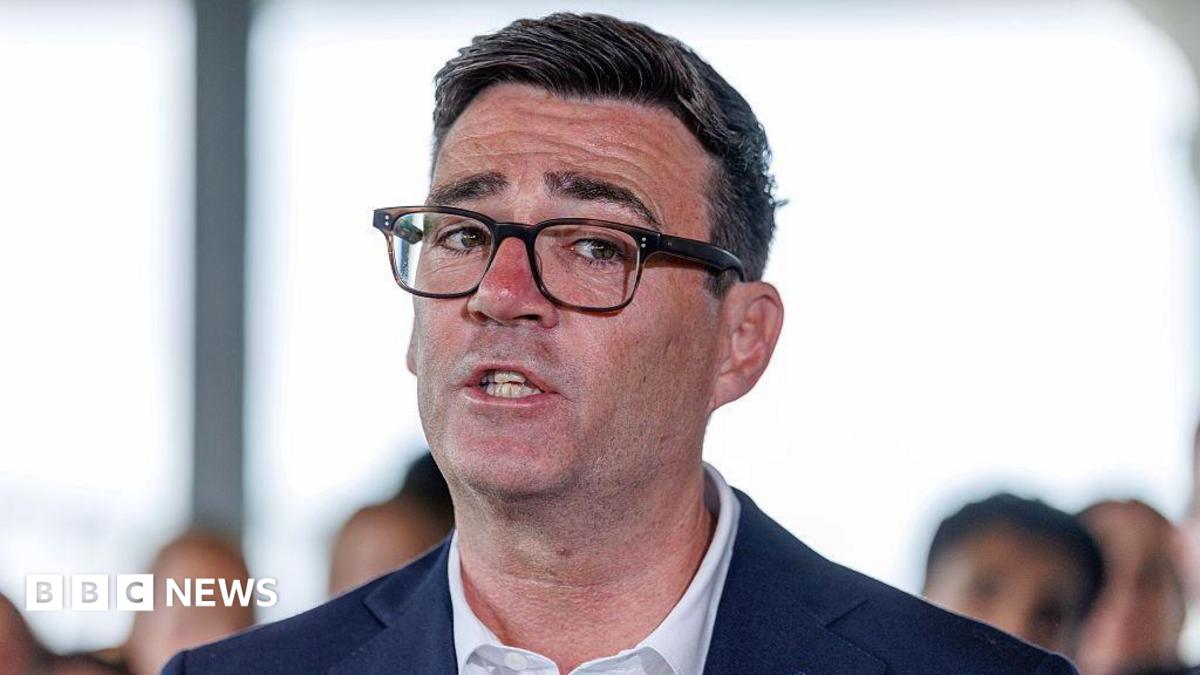
Andy Burnham Scraps Digital ID Plan, Prioritizes Cost of Living
Key Points
- Andy Burnham will become prime minister on Monday and immediately scrap mandatory digital ID plans.
- The Office for Budget Responsibility estimated the digital ID program would cost £1.8 billion over three years.
- Nearly three million people signed a parliamentary petition opposing digital IDs, leading the previous government to make the scheme voluntary.
The Office for Budget Responsibility estimated in November that the program would cost £1.8 billion over three years, though Downing Street rejected this figure. Following nearly three million signatures on a parliamentary petition opposing digital IDs in January, the government abandoned the compulsory approach and relaunched it as a voluntary system. Ministers then promoted the scheme as a tool allowing people to manage childcare and complete tax returns through a "one-stop" app.
Burnham's Immediate Pivot on Starmer's Policy
Read Next

2 Billion South Asians Face Cost Crisis From Middle East War
23 hours ago

Russia Attacks Ukraine: 19 Injured in Kyiv, Zaporizhzhia, Odesa Strikes
1 days ago
Dame Karen Bradley, Chair of the Home Affairs Committee, had previously characterized the government's handling of the digital ID launch as "nothing short of a fiasco" which "raised fears of government over-reach into people's lives." Her investigation into the policy's rollout and subsequent changes highlighted the political vulnerability of the initiative.
Burnham's decision to scrap the scheme entirely represents a sharper break with his predecessor's approach than the incremental retreat Starmer had already undertaken. By abandoning the voluntary version rather than simply maintaining it, Burnham signals a complete reprioritization of government machinery.
Related coverage: 2 Billion South Asians Face Cost Crisis From Middle East War
Deputy Labour leader Lucy Powell, a Burnham ally, acknowledged on Sunday with Laura Kuenssberg that the money saved was "not an insignificant amount" and would be "reprioritised and redistributed in different ways." She emphasized that the decision transcended mere financial considerations. "It's not just about the money—it's actually about the attention and the focus, so that the whole of government machinery can work in service of the agenda and the vision that the Labour government is setting out under Andy Burnham," Powell said.
Burnham will meet with King Charles III on Monday to formally assume office. His office said "one of the first things this government will do is put its focus where people need it right now," with scrapping digital ID allowing the government to redirect resources toward everyday priorities.
The digital ID reversal mirrors a broader political pattern: the last major pivot of this magnitude came when the previous Conservative government abandoned its own national identification card scheme in 2010 after public and parliamentary opposition mounted.
Why this matters: If you're concerned about government surveillance or data privacy, Burnham's decision removes a major data collection framework that critics feared could enable mass tracking. Conversely, if cost-of-living pressures are affecting your household, this signals the incoming government will prioritize financial relief measures over administrative infrastructure projects. For civil servants and local authority workers, the decision means billions in spending shifts from technology implementation to frontline services—directly affecting where government hiring and service delivery will focus over the coming years.
What Happens Next
Burnham's government is likely to announce specific cost-of-living interventions within weeks, potentially including energy price support or benefit increases. Opposition parties may criticize the digital ID scrapping as abandoning technological modernization, while privacy advocates will welcome the decision. The £1.8 billion freed from the scheme will become a focal point in parliamentary debates over government spending priorities.
Sources: Publicly available news sources.
Disclaimer: This article was produced with AI assistance based on publicly available news sources. While we strive for accuracy, NewsOracle makes no warranty as to the completeness or accuracy of the information. Errors and omissions may occur. Readers should independently verify all information before acting on it. NewsOracle does not intend to defame any individual or organisation and accepts no liability for any loss or damage arising from reliance on this content. Content is for informational purposes only and does not constitute legal, financial, medical, or professional advice. All rights reserved. Unauthorised reproduction prohibited.
Politics Desk
The NewsOracle Politics Desk covers US politics, Congress, the White House, Supreme Court, global elections and international relations.
Latest coverage: Andy Burnham