France Orders ISPs to Block Polymarket Over Gambling Concerns

Key Points
- France's Autorité Nationale des Jeux (ANJ) ordered ISPs to block Polymarket on July 16, 2026, treating it as illegal gambling rather than a financial platform.
- Polymarket attracted 578,751 visits from 205,057 unique French users in June despite a financial transaction ban imposed in November 2024.
- France joins over 30 countries restricting Polymarket, with regulatory actions from Switzerland, Poland, Singapore, Belgium, Portugal, Spain, Brazil, Argentina, India, Indonesia, Italy, Germany, Romania, Hungary and Ukraine.
Regulatory Escalation and Global Pattern
The French decision represents an escalation in the country's regulatory stance toward prediction markets. In February 2026, the ANJ reclassified prediction markets as illegal gambling, citing addictive mechanics, the absence of stake limits, and a lack of self-exclusion tools. The regulator also referenced specific incidents that prompted heightened scrutiny, including a complaint from France's weather service, Météo-France, regarding a tampered temperature sensor linked to weather-based bets. That complaint led Paris's cybercrime unit to open an investigation on May 4, 2026.
Read Next
Treasury Sanctions BitBank Exchange Behind Iran's Bitcoin Hormuz Tolls
21 hours ago
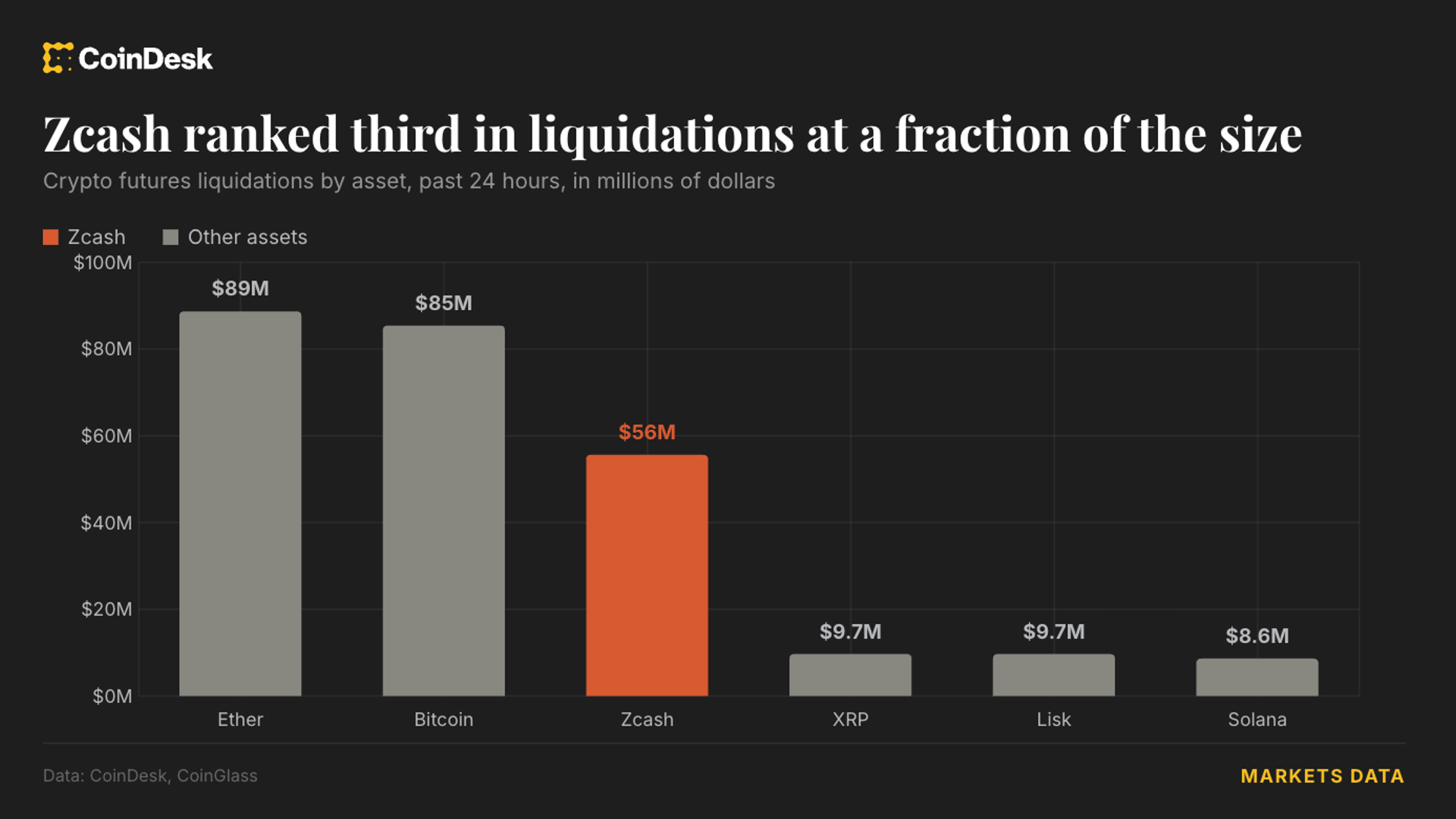
Zcash Jumps 17% as $345M in Crypto Liquidations Hit Traders
1 days ago
Another significant factor in the ANJ's decision was the influence of a prominent French trader known as "Fredi9999," who moved U.S. election odds with multimillion-dollar positions during 2024. These incidents contributed to the regulatory hardening that culminated in the July 2026 blocking order.
France's action places it within a widening international coalition restricting Polymarket access. The platform now faces restrictions in more than 30 jurisdictions globally. Switzerland blocked the site in November 2024, followed by Poland, Singapore, and Belgium in early 2025. Portugal moved to restrict access in January 2026, and Spain issued a temporary block in May pending a regulatory probe. Brazil, Argentina, India, and Indonesia have also implemented restrictions, alongside Italy, Germany, Romania, Hungary, and Ukraine.
Related coverage: Treasury Sanctions BitBank Exchange Behind Iran's Bitcoin Hormuz Tolls
Polymarket did not immediately respond to requests for comment regarding the French blocking order. The company has not publicly addressed the substance of the ANJ's concerns or indicated plans to modify its operations in response to the regulatory actions across multiple jurisdictions.
The pattern of Polymarket restrictions reveals an emerging international consensus among gambling and financial regulators that the platform's mechanics present consumer protection concerns. While Polymarket positions itself as a financial derivatives market, regulators increasingly classify its operations as gambling, particularly given the mechanics that regulators describe as addictive and the platforms' failure to implement traditional gambling safeguards such as self-exclusion tools and betting limits.
France's escalation from a financial transaction ban to a full ISP blocking order demonstrates that partial restrictions have proven ineffective at containing usage. The regulator's decision to require internet providers to filter access at the network level suggests confidence that this technical approach will succeed where financial constraints alone have failed.
Why this matters: If you use Polymarket for prediction trading or hold positions on the platform, the expanding list of country-level blocks may soon affect your ability to access the service and manage your positions, depending on your location. The regulatory pattern also signals that other prediction market platforms operating in jurisdictions without explicit gambling safeguards face similar risk of restriction.
Market Outlook
Polymarket likely faces continued regulatory pressure across European and Asian markets over the next 12-18 months. The trend toward network-level blocking rather than financial restrictions suggests regulators view product design changes as unlikely. Expect additional jurisdiction-specific bans in major markets, though the platform's decentralized structure may complicate enforcement efforts.
Sources: CoinDesk and other international news outlets.
Disclaimer: This article was produced with AI assistance based on publicly available news sources. While we strive for accuracy, NewsOracle makes no warranty as to the completeness or accuracy of the information. Errors and omissions may occur. Readers should independently verify all information before acting on it. NewsOracle does not intend to defame any individual or organisation and accepts no liability for any loss or damage arising from reliance on this content. Content is for informational purposes only and does not constitute legal, financial, medical, or professional advice. All rights reserved. Unauthorised reproduction prohibited.
Markets Desk
The NewsOracle Markets Desk covers stock markets, cryptocurrency, economic policy and breaking financial news from Wall Street and global exchanges.
Latest coverage: Cryptocurrency Regulation