Andy Burnham's Manchester Model: Can 'Manchesterism' Transform UK Policy?
Key Points
- Andy Burnham was blocked from standing for parliament five months ago before returning in June and eventually becoming prime minister.
- Manchester's economic success since the 1996 IRA bombing relied on council-led de-risking of brownfield investments followed by private capital inflows.
- Burnham has pursued ambitious projects including bidding for the 2035 Women's World Cup final and a 'Great Northern' Olympic bid across northern England.
Manchester's Proven Development Model
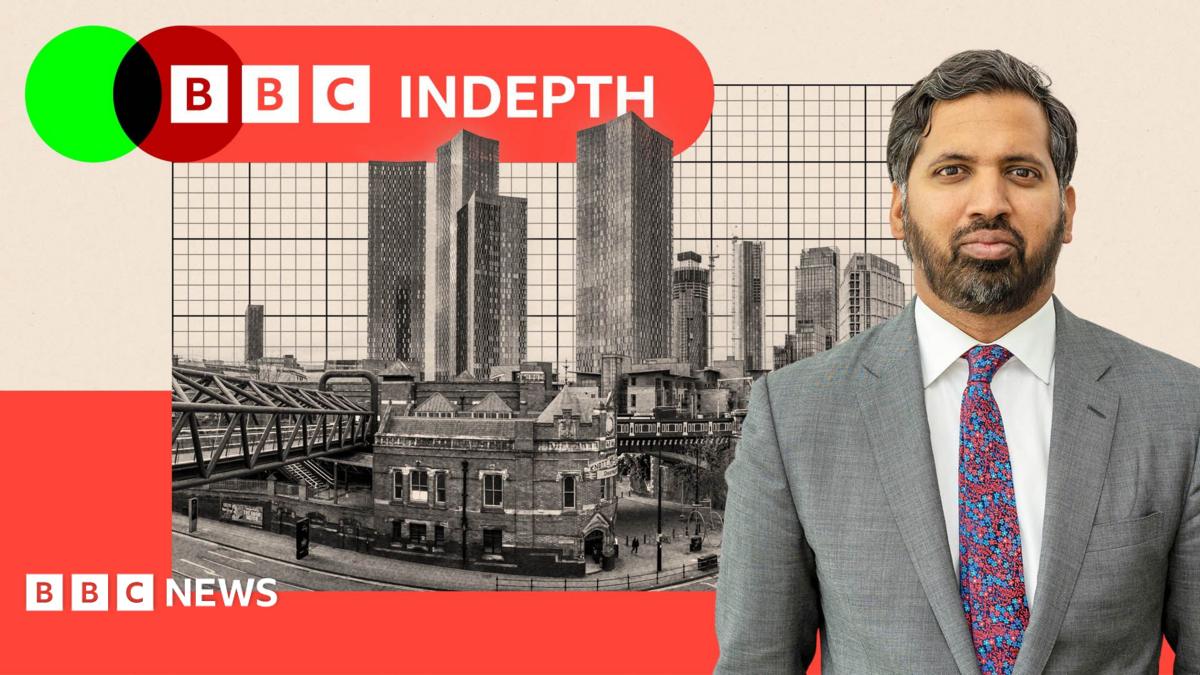
The city's post-1996 transformation offers a detailed case study in strategic economic development. Council leader Sir Richard Leese and his top civil servant, the late Sir Howard Bernstein, implemented bold centrally-driven strategic plans that were largely delivered through private capital and significant international investment. The council's approach to brownfield industrial sites proved crucial: the private sector would not invest in these risky properties, but the council de-risked investments using public money, sometimes stepping in to tide projects over during financial crises.
Read Next

Trump Claims US Permanent Control of Greenland Security Deal
8 hours ago

2 Billion South Asians Face Cost Crisis From Middle East War
1 days ago
Paul Thwaite, chief executive of NatWest, which has funded some of these projects and sits on the board of the University of Manchester, explained that Manchester's success story over the past 20 years was "built on there being a clear plan the private sector can get behind." After the council prepared the ground, private capital poured in, visibly transforming the skyline with cranes and construction.
The council also maintained flexibility on planning requirements, offering interpretations on affordable housing mandates that were sometimes effectively waived or met through funding building in cheaper areas of the city. This pragmatic approach, combined with high-level strategic vision, created an environment where Manchester became the fastest-growing city economy in the country.
Related coverage: Trump Claims US Permanent Control of Greenland Security Deal
Burnham's broader ambitions suggest an understanding of this model's power to reshape perceptions. Manchester has already poached the Brit Awards from London after half a century in the capital—a symbolic victory in repositioning regional identity.
The city's political economy also draws on deep historical traditions. Manchester has long blended free-market principles with strong social commitment. The city's 19th-century cotton traders championed free trade and liberal economics simultaneously with the emergence of the co-operative movement, trade unions, and the Suffragettes. Even the Manchester Ship Canal, an emblem of monopoly-breaking free trade, required local government intervention backed by workers.
Burnham himself embodies the north's historical pattern of outward migration. After graduating in the early 1990s, he could only secure an unpaid reporter role on the Middleton Guardian. He told Islam: "I had to do what so many people of my generation, born in the 60s or 70s in the north-west of England had to do to get on in life. We had to go south."
The central question facing Burnham's premiership is whether a model built on local council leadership, strategic site preparation, pragmatic planning flexibility, and private sector partnership can scale to national governance. Manchester's success depended on clear, focused leadership from Leese and Bernstein with a specific geographic zone and manageable scope. Applying these principles across the entire UK economy, with its competing regional interests, multiple levels of government, and vastly more complex stakeholder dynamics, presents fundamentally different challenges than revitalizing a single city centre.
Why this matters: If you live outside London or work in regional development, Burnham's approach to governance directly affects whether your city gets investment prioritised by central government or remains dependent on Westminster's traditionally London-focused spending patterns. His premiership will test whether regional regeneration can become national policy rather than an exception.
What Happens Next
Burnham will likely attempt to implement Manchester-style strategic planning frameworks across English regional authorities, though success will depend on whether Westminster can replicate the focused council leadership and private sector coordination that worked in a single city. Resistance from London-based interests and competing regional claims may dilute the model's effectiveness at national scale.
Sources: Publicly available news sources.
Disclaimer: This article was produced with AI assistance based on publicly available news sources. While we strive for accuracy, NewsOracle makes no warranty as to the completeness or accuracy of the information. Errors and omissions may occur. Readers should independently verify all information before acting on it. NewsOracle does not intend to defame any individual or organisation and accepts no liability for any loss or damage arising from reliance on this content. Content is for informational purposes only and does not constitute legal, financial, medical, or professional advice. All rights reserved. Unauthorised reproduction prohibited.
Politics Desk
The NewsOracle Politics Desk covers US politics, Congress, the White House, Supreme Court, global elections and international relations.
Latest coverage: Andy Burnham