Supreme Court Justices Tell Congress Safety at Risk, Seek More Security Funding
Key Points
- Supreme Court justices communicated to Congress about safety threats facing them and their families.
- The justices requested that Congress allocate additional funding for their security protection.
- The plea represents an escalation in concerns about judicial security in recent years.
Judicial Security Under Scrutiny
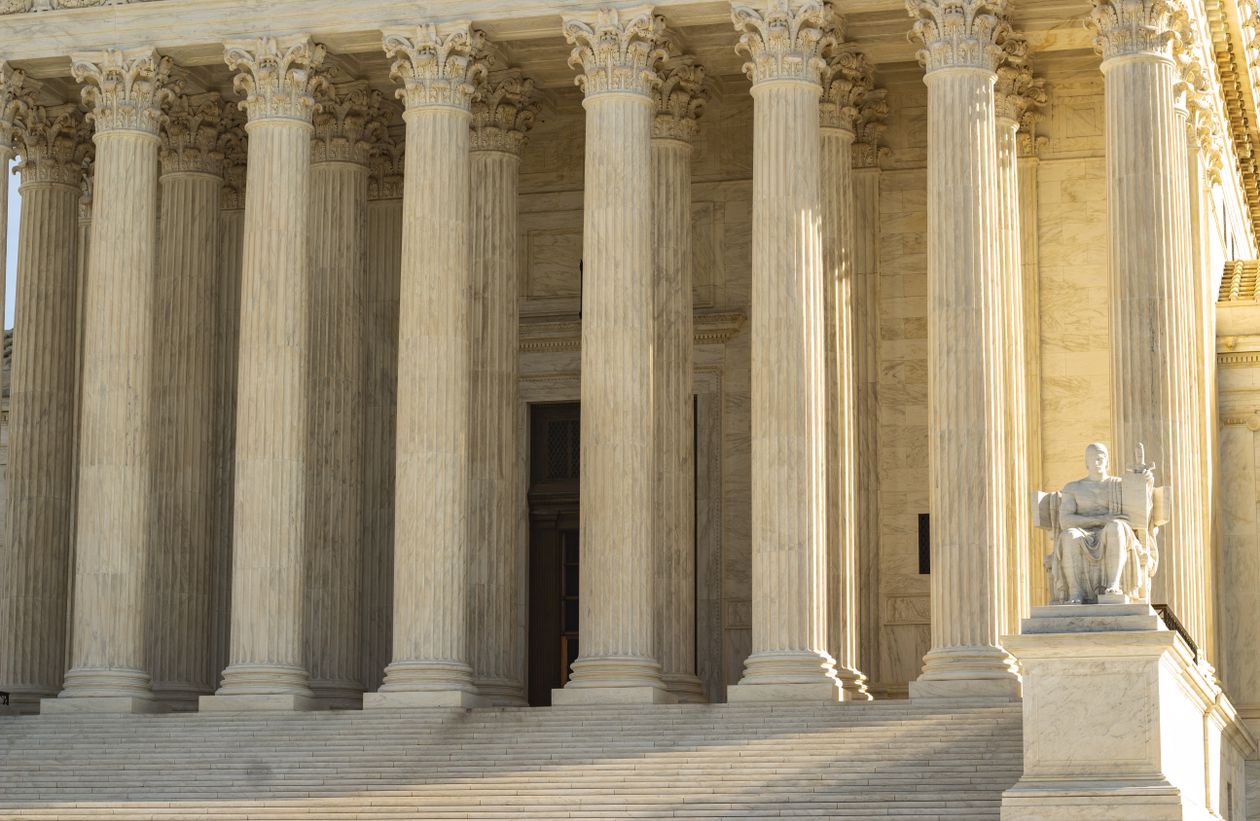
The justices' direct appeal to Congress reflects heightened concerns about security threats. The Supreme Court building itself has faced increased security measures in recent years, and individual justices have also reported various security concerns at their residences and in public spaces.
Read Next

2 Billion South Asians Face Cost Crisis From Middle East War
23 hours ago

Russia Attacks Ukraine: 19 Injured in Kyiv, Zaporizhzhia, Odesa Strikes
1 days ago
Previously, in 2022, federal law enforcement arrested a man outside Justice Samuel Alito's Maryland home, marking a notable incident that drew attention to vulnerabilities in judicial security. Such incidents have contributed to the justices' assessment that current protective measures are insufficient.
The justices did not specify in their communication the particular nature of the threats they face, nor did they detail the amount of additional funding they believe is necessary. Their request, however, places the burden on Congress to evaluate and act on their security concerns within the broader appropriations process.
Related coverage: 2 Billion South Asians Face Cost Crisis From Middle East War
Representatives and senators from both parties have shown varying levels of engagement with judicial security issues. Some lawmakers have expressed support for enhanced protection measures for federal judges, while others have focused on other budgetary priorities. The justices' direct intervention in the appropriations discussion signals that they view the matter as urgent.
The Supreme Court has experienced unprecedented public scrutiny in recent years following major decisions on abortion rights, gun regulation, and voting access. These rulings have sparked widespread protests and activism, some of which has involved demonstrations outside justices' homes and public appearances.
Why this matters: If you care about the stability and independence of the federal judiciary, how Congress responds to the justices' security request will directly affect whether the Supreme Court can operate without fear. A well-protected judiciary insulates courts from pressure and intimidation, which sustains the rule of law. Conversely, inadequate security could influence how justices approach their work or their willingness to hold office, ultimately shaping the composition and decision-making of the nation's highest court.
What Happens Next
Congress will likely hold hearings on judicial security funding in the coming months. Lawmakers from both parties may support increased appropriations, though debates could emerge over the specific amount and implementation methods. The justices' direct appeal to Congress will probably accelerate the budgeting process for security measures, and additional funding is expected to be approved, though the scale remains uncertain.
Sources: AP News and other international news outlets.
Disclaimer: This article was produced with AI assistance based on publicly available news sources. While we strive for accuracy, NewsOracle makes no warranty as to the completeness or accuracy of the information. Errors and omissions may occur. Readers should independently verify all information before acting on it. NewsOracle does not intend to defame any individual or organisation and accepts no liability for any loss or damage arising from reliance on this content. Content is for informational purposes only and does not constitute legal, financial, medical, or professional advice. All rights reserved. Unauthorised reproduction prohibited.
Politics Desk
The NewsOracle Politics Desk covers US politics, Congress, the White House, Supreme Court, global elections and international relations.
Latest coverage: Supreme Court